
USA Visit Visa Requirements 2025 – Complete Guideere
Planning to visit the United States in 2025? Whether you’re traveling for tourism, business, medical treatment, or to visit family and friends, understanding the USA visit visa requirements is crucial for a successful application. This comprehensive guide covers everything you need to know about obtaining a B-1/B-2 visitor visa for the United States in 2025, including recent changes, fees, application procedures, and expert tips to increase your chances of approval.
The United States remains one of the most sought-after destinations for international travelers. However, the visa application process can seem daunting without proper guidance. With recent policy updates and fee changes implemented in 2025, it’s more important than ever to stay informed about current requirements and procedures.
Understanding the USA Visitor Visa (B-1/B-2)
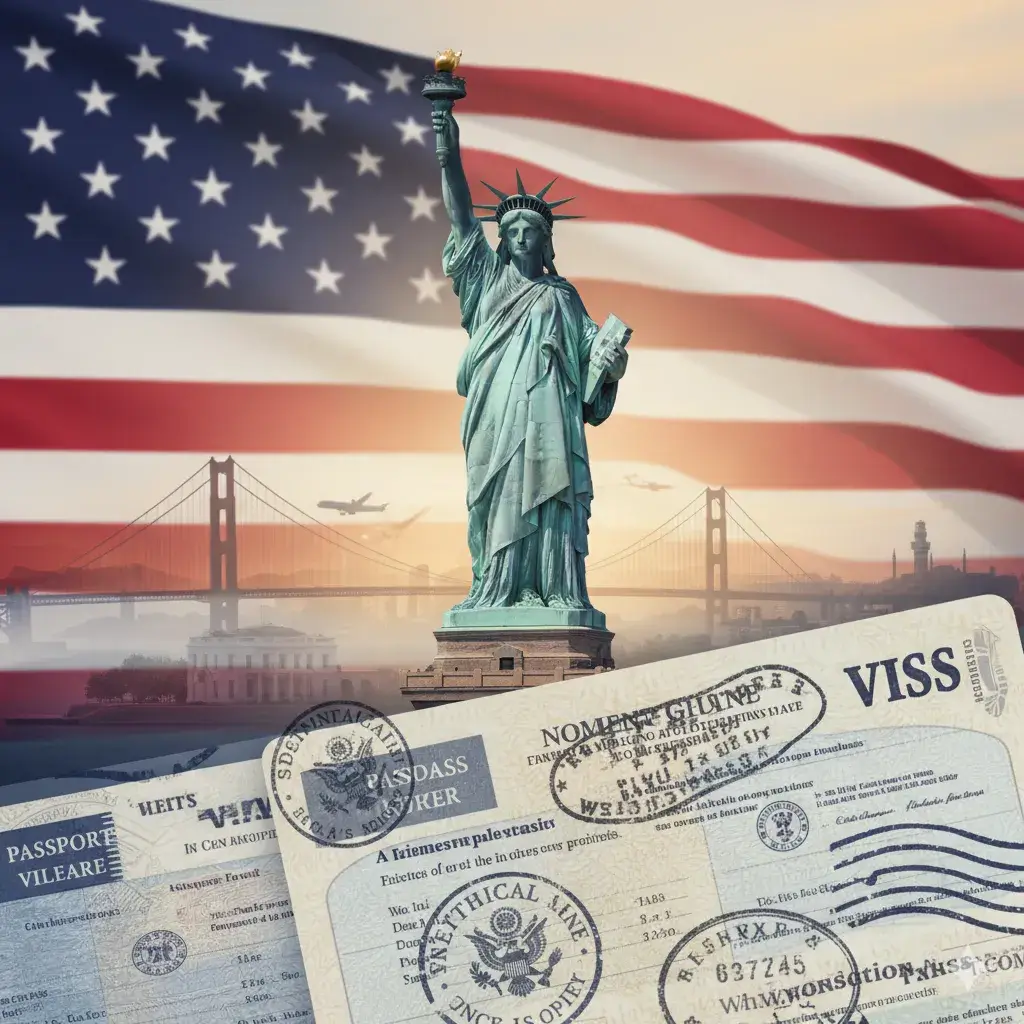
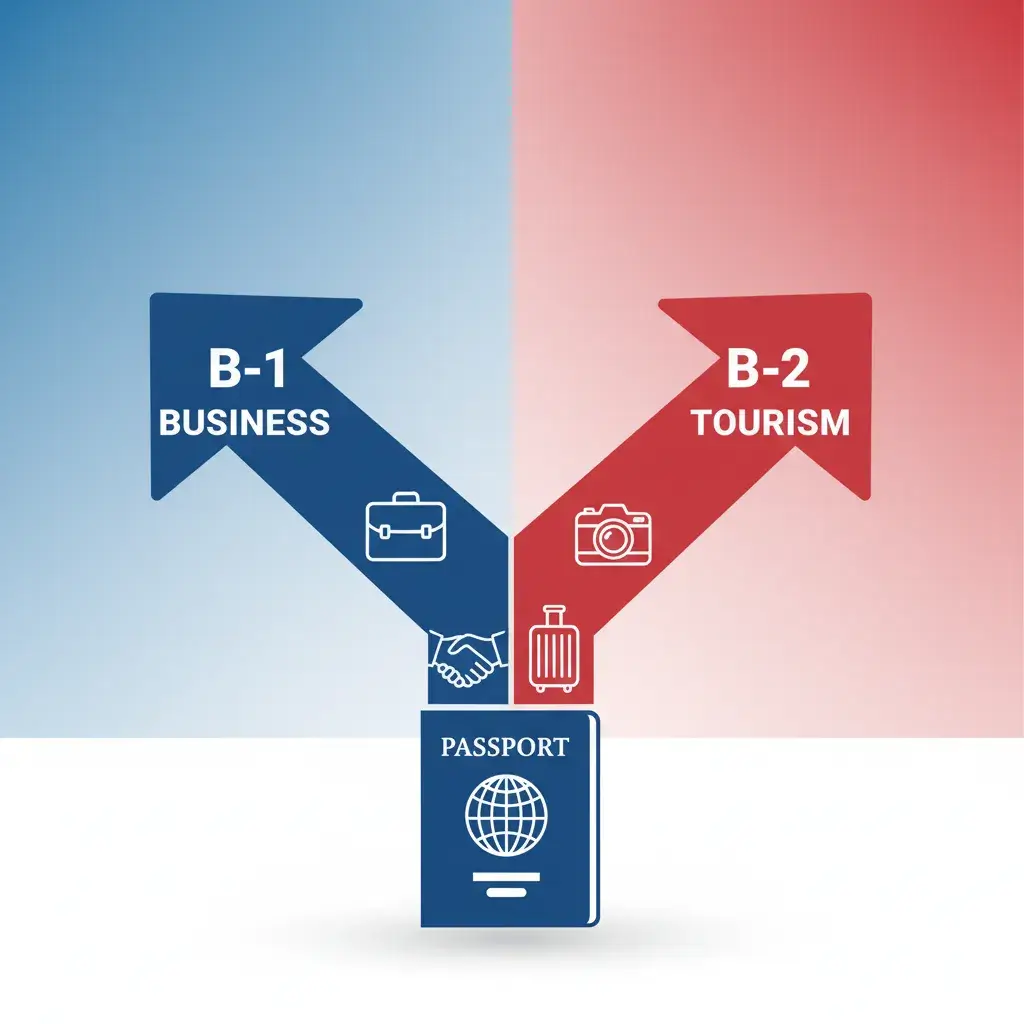
The USA visitor visa, officially known as the B visa, is a nonimmigrant visa that allows foreign nationals to enter the United States temporarily. There are two main categories under this visa type that serve different purposes for international travelers.
B-1 Visa (Business Visitor)
The B-1 visa is specifically designed for individuals traveling to the United States for business-related purposes. This category covers a wide range of professional activities that do not involve receiving payment from U.S. sources.
Permitted activities under a B-1 visa include:
- Attending business meetings, conferences, or conventions with industry professionals
- Negotiating contracts or consulting with business associates and partners
- Participating in short-term training programs that do not involve employment
- Settling estates or handling business transactions and legal matters
- Attending scientific, educational, professional, or business conventions
- Conducting market research or exploring investment opportunities
- Meeting with clients or suppliers for business development
It’s critically important to note that B-1 visa holders cannot accept employment or receive salary from a U.S. source during their stay. Any form of paid work requires a different visa category.
B-2 Visa (Tourist/Medical Treatment)
The B-2 visa is intended for tourism, vacation, and medical treatment purposes. This is the most common visa type for leisure travelers and those seeking healthcare services in the United States.
Activities permitted under a B-2 visa include:
- Vacationing and sightseeing throughout the United States
- Visiting family members or friends residing in the U.S.
- Receiving medical treatment from U.S. healthcare facilities
- Participating in social events hosted by fraternal or social organizations
- Enrolling in short recreational courses that are non-credit (such as a cooking class or art workshop)
- Participating as an amateur in musical, sports, or similar events without receiving payment
- Attending cultural or social gatherings and celebrations
B-1/B-2 Combined Visa
In most cases, the U.S. Department of State issues a combined B-1/B-2 visa, allowing the holder to travel for both business and tourism purposes. This flexibility makes it the most popular choice for temporary visitors who may want to combine business activities with leisure travel.
Duration and Validity: A B-1/B-2 visa is typically valid for up to 10 years from the date of issuance, depending on reciprocity agreements with your country. However, the validity period of the visa does not determine how long you can stay in the United States. Each time you enter, a U.S. Customs and Border Protection (CBP) officer will determine your authorized period of stay, which is usually up to 6 months per entry.
Visa Waiver Program (VWP) vs. B-2 Visa
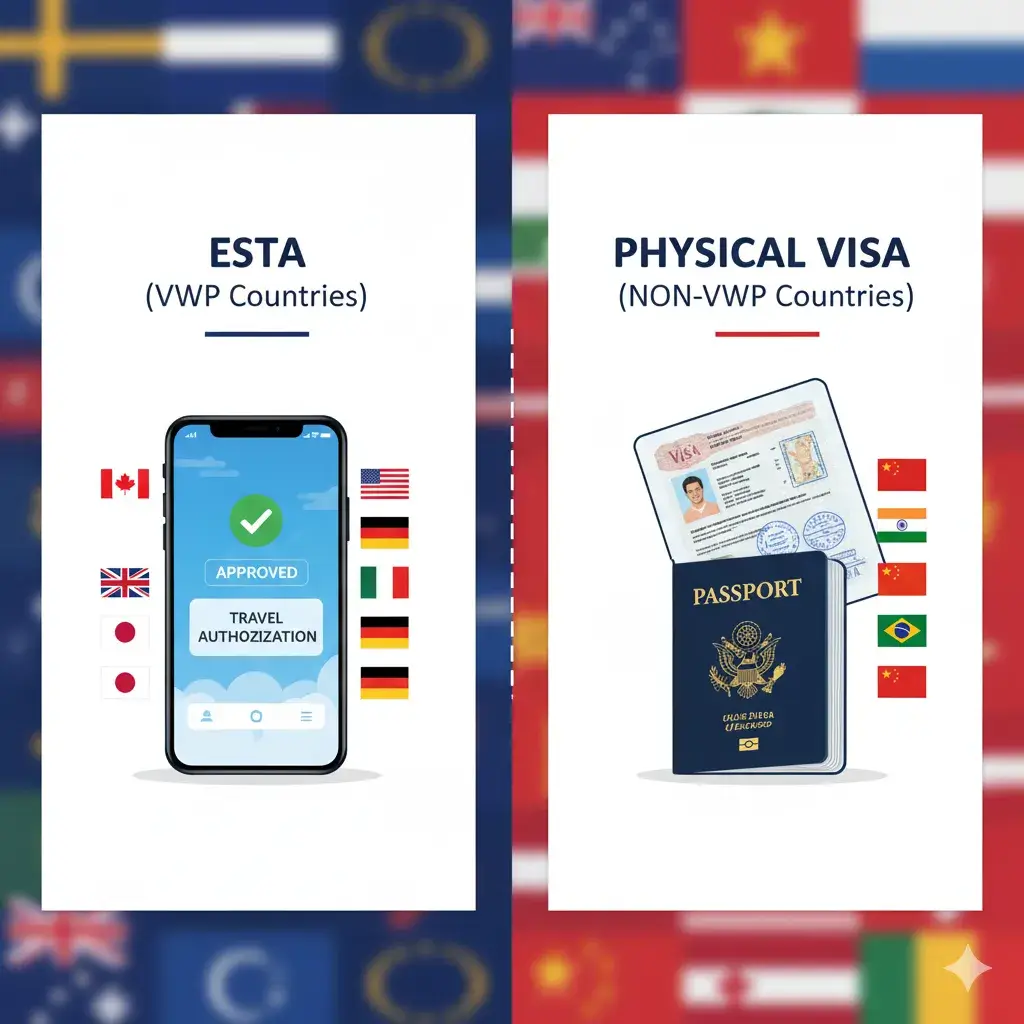
Before applying for a visitor visa, it’s essential to determine whether you qualify for the Visa Waiver Program (VWP), which allows citizens of 39 participating countries to travel to the United States without obtaining a traditional visa.
Visa Waiver Program Eligibility
if you’re a citizen of one of the following countries, you may be eligible to travel to the U.S. under the VWP:
Andorra, Australia, Austria, Belgium, Brunei, Chile, Croatia, Czech Republic, Denmark, Estonia, Finland, France, Germany, Greece, Hungary, Iceland, Ireland, Italy, Japan, Latvia, Liechtenstein, Lithuania, Luxembourg, Malta, Monaco, Netherlands, New Zealand, Norway, Poland, Portugal, San Marino, Singapore, Slovakia, Slovenia, South Korea, Spain, Sweden, Switzerland, Taiwan, and the United Kingdom.
ESTA (Electronic System for Travel Authorization)
VWP-eligible travelers must obtain approval through ESTA before traveling to the United States. The ESTA application process is entirely online and typically provides instant approval, though it’s recommended to apply at least 72 hours before departure.
Key Differences Between ESTA and B-2 Visa:
- Duration: ESTA allows stays of up to 90 days, while B-2 visas typically permit stays of up to 6 months
- Application Process: ESTA is completed online without an interview; B-2 visa requires Form DS-160 and an in-person interview
- Extension: ESTA stays cannot be extended; B-2 visa holders may apply for extensions
- Validity: ESTA is valid for 2 years; B-2 visas are often valid for 10 years
- Cost: ESTA costs approximately $21; B-2 visa application fees are significantly higher
If you’re not from a VWP country, plan to stay longer than 90 days, have previously been denied entry to the U.S., or have certain criminal or visa violations in your history, you must apply for a B-2 visitor visa.
Complete USA Visit Visa Requirements 2025
To successfully apply for a USA visitor visa in 2025, you must meet several eligibility criteria and provide comprehensive documentation to support your application.
Basic Eligibility Requirements
1. Temporary Visit Intent
You must demonstrate that your visit to the United States is temporary and that you intend to return to your home country after your stay. This is one of the most critical aspects of your application.
2. Strong Home Country Ties
You need to prove significant ties to your home country that will ensure your return. These ties can include:
- Stable employment with a reputable employer
- Property ownership (house, land, or other real estate)
- Family relationships (spouse, children, parents, or close relatives)
- Educational enrollment or commitments
- Business ownership or professional obligations
3. Financial Capability
You must demonstrate sufficient financial resources to cover all costs associated with your trip, including:
- Round-trip airfare
- Accommodation expenses
- Daily living costs
- Medical insurance
- Emergency funds
4. Valid Purpose
Your reason for traveling must fall within the permitted activities for a B-1/B-2 visa.
5. No Immigration Intent
You must convince the consular officer that you do not intend to immigrate to the United States or overstay your authorized period.
Required Documents for USA Visitor Visa Application
Mandatory Documents:
- Valid Passport: Your passport must be valid for at least six months beyond your intended period of stay in the United States (unless country-specific agreements exempt this requirement).
- DS-160 Confirmation Page: Completed Online Nonimmigrant Visa Application form with barcode.
- Visa Application Fee Receipt: Proof of payment for the non-refundable visa application fee.
- Photograph: One recent color photograph meeting specific U.S. visa photo requirements (2×2 inches, white background, taken within the last 6 months).
- Interview Appointment Letter: Confirmation of your scheduled visa interview.
Supporting Documents:
- Proof of Financial Capability:
- Bank statements from the last 3-6 months
- Income tax returns for the last 2-3 years
- Employer’s letter stating salary and position
- Sponsorship letter (if someone else is covering your expenses)
- Property ownership documents
- Investment portfolios or fixed deposits
- Employment Verification:
- Employment letter on company letterhead
- Pay stubs or salary certificates
- Business registration documents (if self-employed)
- Professional licenses or certifications
- Evidence of Home Country Ties:
- Property deeds or rental agreements
- Family photographs and documents
- Marriage certificate
- Children’s school enrollment certificates
- Letters from educational institutions (if you’re a student)
- Travel Itinerary:
- Detailed travel plans
- Hotel reservations or accommodation letters
- Flight itinerary (not required to purchase tickets before visa approval)
- Tour bookings or activity plans
- Previous Travel History:
- Previous U.S. visas (if any)
- Passports showing international travel
- Visa stamps from other countries.
For Medical Treatment (B-2):
- Medical diagnosis from your local physician
- Letter from U.S. medical facility confirming appointment
- Proof of financial arrangements for medical treatment
- Medical records and test results.
For Business Travel (B-1):
- Invitation letter from U.S. company or organization
- Details about the business relationship
- Conference or event registration
- Business contracts or agreements.
Important Restrictions and Prohibitions
The following activities are NOT permitted on a B-1/B-2 visitor visa:
- Employment or receiving salary from a U.S. source
- Permanent residence or long-term stays
- Enrollment in credit-bearing academic programs
- Birth tourism (traveling to give birth for citizenship purposes)
- Paid performances or professional athletic participation
- Work as a journalist or in foreign information media
- Crew member services on aircraft or vessels
USA Visitor Visa Fees 2025
The cost structure for U.S. visitor visas has undergone significant changes in 2025. Understanding these fees is crucial for budget planning.
Standard Visa Application Fee
The basic visa application fee for B-1/B-2 visitor visas is $185. This Machine Readable Visa (MRV) fee is non-refundable, meaning it will not be returned even if your visa application is denied.
New Visa Integrity Fee (Effective October 1, 2025)
A significant change in 2025 is the introduction of a new $250 “visa integrity fee” that applies to most nonimmigrant visas, including B-1/B-2 visitor visas. This fee is mandated under the One Big Beautiful Bill Act signed in July 2025.
Key Points About the Visa Integrity Fee:
- The $250 fee is in addition to all other application and processing fees, and it cannot be waived or reduced
- The fee is paid at the time of visa issuance, not during the initial application
- The Department of Homeland Security may raise the fee through rulemaking, and beginning in 2026, the fee will increase annually based on inflation
- Visa Waiver Program travelers are exempt from this fee
- Diplomatic visa holders (A and G categories) are also exempt
Total Cost Breakdown for 2025
For applications processed before October 1, 2025:
- Visa Application Fee (MRV): $185
- Total: $185
For applications processed after October 1, 2025:
- Visa Application Fee (MRV): $185
- Visa Integrity Fee: $250
- Total: $435
Additional Potential Costs
- isa Issuance Fee (Reciprocity Fee): Some nationalities may need to pay an additional visa issuance fee if their visa is approved. This varies by country and reciprocity agreements.
- EVUS Fee (for Chinese Citizens): Chinese citizens with 10-year B-1/B-2 visas must enroll in the Electronic Visa Update System (EVUS) every two years at a cost of $30 per enrollment.
- Service Fees: If you use visa facilitation services or agencies, additional service charges will apply.
- Travel to Embassy/Consulate: Costs for traveling to attend your visa interview (transportation, accommodation if needed).
Document Preparation: Expenses for document translation, notarization, or certification if required.
Payment Methodss
Payment methods vary by embassy or consulate location. Common options include:
- Online payment through the embassy website
- Bank deposits
- Cash payments at designated banks
- Credit/debit card payments
Important: Keep all payment receipts safe, as you’ll need them to schedule your visa interview and present at the embassy.
Step-by-Step USA Visa Application Process
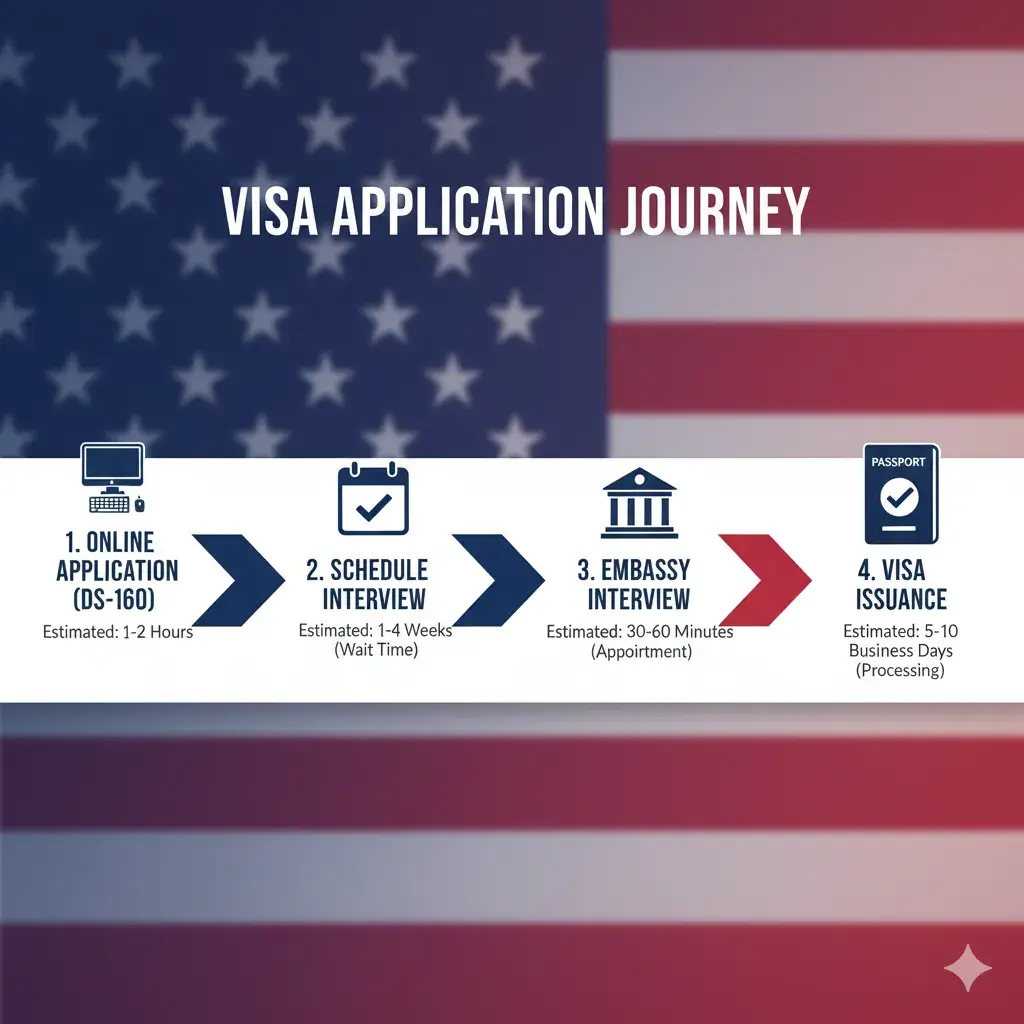
Applying for a USA visitor visa involves several sequential steps that must be completed carefully and accurately.
Step 1: Determine Your Visa Type
Before starting your application, confirm that a B-1/B-2 visitor visa is appropriate for your travel purpose. Review the permitted activities and ensure your intended activities fall within this category.
Step 2: Complete Form DS-160
The DS-160 is a mandatory Online Nonimmigrant Visa Application form for all nonimmigrant visa categories.
- Visit the Consular Electronic Application Center (CEAC) website
- Select the U.S. Embassy or Consulate where you’ll apply
- Start a new application and receive an application ID
- Fill out all sections accurately and completely:
- Personal information
- Travel information
- Previous U.S. travel history
- Contact information
- Family information
- Education and work experience
- Security and background questions
- Upload a compliant digital photograph
- Review all information carefully before submission
- Submit the form electronically
- Print the confirmation page with the barcode.
Important Tips:
- Save your application frequently; the session expires after 20 minutes of inactivity
- Answer all questions truthfully and consistently
- Keep your Application ID number safe to retrieve your application
- Double-check all dates, names, and passport numbers
- The confirmation page is required for your visa interview
Step 3: Pay the Visa Application Fee
After completing the DS-160, you must pay the non-refundable visa application fee of $185.
Payment Process:
- Create a profile on the embassy’s visa appointment system
- Select the visa category (B-1/B-2)
- Generate a payment receipt/deposit slip
- Pay at authorized banks or online (depending on location)
- Keep the receipt number for scheduling your appointment
The payment is typically valid for one year from the date of payment.
Step 4: Schedule Your Visa Interview
Effective September 6, 2025, all nonimmigrant visa applicants should schedule their interview at the U.S. embassy or consulate in their country of residence or nationality.
How to Schedule:
- Log into the visa appointment system
- Enter your DS-160 barcode number
- Enter your visa fee receipt number
- Select an available appointment date
- Print your appointment confirmation letter
Interview Wait Times: Wait times for B-1/B-2 visa appointments can range from 7 days to more than 2 years, depending on the location. You can check current wait times on the U.S. Department of State website by selecting your embassy or consulate location.
Step 5: Prepare for Your Interview
Thorough preparation is key to a successful visa interview.
What to Bring:
- Valid passport
- DS-160 confirmation page
- Visa appointment confirmation letter
- Visa fee payment receipt
- One printed photograph (if upload failed)
- All supporting documents organized in a folder
How to Prepare:
- Review your DS-160 responses
- Organize documents by category
- Practice answering potential interview questions
- Be prepared to explain your travel purpose clearly
- Arrive at least 15-30 minutes before your scheduled time
- Dress professionally and appropriately
Step 6: Attend the Visa Interview
A consular officer will interview you to determine whether you are qualified to receive a visitor visa. You must establish that you meet the requirements under U.S. law to receive a visa.
During the Interview:
- Security Screening: You’ll go through security checks upon arrival at the embassy or consulate.
- Biometric Data Collection: Ink-free, digital fingerprint scans are taken as part of the application process, usually during your interview.
- Document Submission: Submit your documents to the window when called.
- Interview with Consular Officer: Answer all questions honestly and confidently.
Common Interview Questions:
- What is the purpose of your trip to the United States?
- How long do you plan to stay?
- Who will you be visiting?
- What do you do for a living?
- Who is paying for your trip?
- Have you been to the United States before?
- What ties do you have to your home country?
- Why should we grant you a visa?
- Do you have family in the United States?
- When do you plan to return?
Interview Best Practices:
- Answer questions clearly and concisely
- Don’t provide information unless asked
- Be honest and consistent with your DS-160 responses
- Maintain eye contact and speak confidently
- Don’t argue with the consular officer
- If you don’t understand a question
Step 7: Administrative Processing (If Required)
A consular officer will interview you to determine whether you are qualified to receive a visitor visa. You must establish that you meet the requirements under U.S. law to receive a visa.
During the Interview:
- Security Screening: You’ll go through security checks upon arrival at the embassy or consulate.
- Biometric Data Collection: Ink-free, digital fingerprint scans are taken as part of the application process, usually during your interview.
- Document Submission: Submit your documents to the window when called.
- Interview with Consular Officer: Answer all questions honestly and confidently.
Common Interview Questions:
- What is the purpose of your trip to the United States?
- How long do you plan to stay?
- Who will you be visiting?
- What do you do for a living?
- Who is paying for your trip?
- Have you been to the United States before?
- What ties do you have to your home country?
- Why should we grant you a visa?
- Do you have family in the United States?
- When do you plan to return?
Interview Best Practices:
- Answer questions clearly and concisely
- Don’t provide information unless asked
- Be honest and consistent with your DS-160 responses
- Maintain eye contact and speak confidently
- Don’t argue with the consular officer
- If you don’t understand a question, politely ask for clarification
Step 8: Visa Issuance and Passport Return
If your visa is approved:
- Visa Issuance Fee: Pay any applicable visa issuance (reciprocity) fee if required for your nationality.
- Visa Integrity Fee: Starting October 1, 2025, pay the $250 visa integrity fee at the time of issuance.
- Passport Collection: Your passport will be returned to you with the visa stamped inside, typically within 5-10 business days.
Verify Visa Details: Check all information on the visa stamp carefully.
Frequently Asked Questions (FAQs)
Q1: How long does it take to get a USA visitor visa?
Answer: The processing time varies significantly by location and season. Interview wait times can range from 7 days to over 2 years depending on the embassy or consulate. After the interview, visa processing typically takes 5-10 business days, though administrative processing can extend this to several weeks or months. Always apply well in advance of your planned travel.
Q2: Can I work in the United States on a B-1/B-2 visa?
Answer: No. B-1/B-2 visa holders are strictly prohibited from accepting employment or receiving salary from U.S. sources. Engaging in unauthorized work can result in visa cancellation, deportation, and future visa denials. If you want to work in the U.S., you need a work visa such as H-1B, L-1, or other employment-based visa categories.
Q3: What is the difference between visa validity and duration of stay?
Answer: Visa validity refers to how long your visa remains valid for entry into the U.S. (often 10 years). Duration of stay is how long you can remain in the U.S. on each visit, determined by the CBP officer at the port of entry (usually up to 6 months). Even if your visa is valid for 10 years, each individual stay is limited to the period granted on your I-94 form.
Q4: How much bank balance is required for a USA tourist visa?
Answer: There is no specific minimum bank balance requirement for a USA tourist visa. However, you must demonstrate sufficient funds to cover all expenses during your trip. Generally, showing $5,000-$10,000 or more in savings, along with regular income and employment, strengthens your application. The amount depends on the length of your stay, travel plans, and whether you have a sponsor.
Q5: Can I apply for a USA visa if I was previously denied?
Answer: Yes, you can reapply for a USA visa after a denial. However, you should wait until your circumstances have changed significantly. Address the reasons for the previous denial by gathering stronger documentation, improving your ties to your home country, or demonstrating better financial stability. Simply reapplying without changes will likely result in another denial.